When Support Arrives On Time: Caring For Life From The Territory
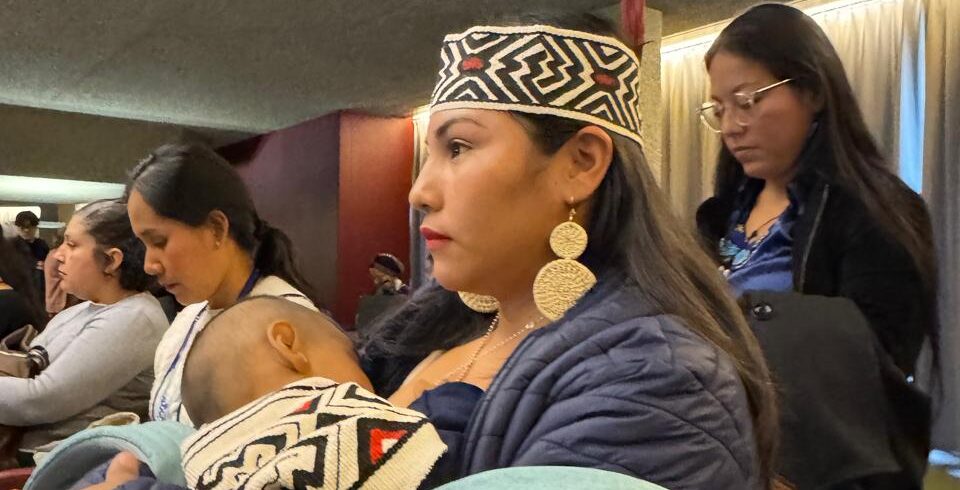
Written by Maglin Reonela Alvarado Vargas, Yine from Peru, 2nd cohort member of the ICI International Environmental Policy Fellowship Program
Note: This content was originally produced in Spanish and has been translated into English for publication.
Nota: Este contenido fue producido originalmente en español. A continuación, se presenta la versión en inglés; el texto original en español se encuentra al final.
English translation
My name is Maglin Alvarado Vargas, and I am a young Indigenous woman from the Yine people, from the native community of Monte Salvado in the Peruvian Amazon. I grew up understanding that the forest, the river, and the people are all part of the same body. For us, the territory is not just the place where we live; it is our home, our school, and our natural pharmacy. Therefore, caring for the territory is not only an environmental task—it is a way of caring for life, for the health of our families, and for the future of our children.
In recent years, we have watched with great concern as alluvial gold mining has affected our rivers, our food, and our peace of mind. The mercury used in this activity not only contaminates the water and forest, but it also quietly enters our bodies through the fish, which is one of our main sources of food. Many mothers fear for their children’s health, but for a long time we lacked clear information or processes that would allow us to truly understand what was happening and how to protect ourselves.
The Inclusive Conservation Initiative (ICI) Fellowship marked an important change for us because it provided something we rarely have: time and continuity. It was not short-term or rushed support, but accompaniment that allowed us to move forward calmly. Thanks to this long-term funding, we were able to start a process of training Indigenous monitors, engage in dialogue with communities, explain in simple terms what mercury is and how it affects our health, and make decisions together after careful discussion and collective agreement.
This support ensured that the work did not remain in small, isolated projects, but was considered from a territorial perspective. Communities began to participate more, ask questions, and take an interest in protecting their health and food. Knowledge stopped coming only from outside and began to be built from our own experiences and wisdom.
This effort should not remain limited to Madre de Dios. Just as FENAMAD, as a regional Indigenous organization, is promoting this process, it is important that other organizations and Indigenous federations continue to join, because this problem is not just local. Destructive mining has been spreading, harming people’s health, destroying important landscapes, and putting ancestral territories at risk in different parts of the Amazon.
As Indigenous peoples, we know that we are the primary protectors of the forest. We do not only care for nature for ourselves, but also for many non-Indigenous people who depend on the water, air, and balance that keep the Amazon forest alive. The Amazon rivers of Peru do not remain within our borders; they flow to neighboring countries like Brazil and Bolivia, among others. Our Amazon rivers are fragile and cannot protect themselves; they need us, but also the commitment of governments and the world.
As a fellow, this experience strengthened my path of leadership. I learned that leading is not about imposing, but about accompanying and listening. Along the way, I always remember the words of my grandmother Guillermina, whom we called jiro in our Yine language, a wise woman from my community. She said that a people without territory is a people without identity, and that the destruction of the forest, over time, also destroys our history and our way of being a people.
Today, we know that when support arrives with time, respect, and trust in communities, it is possible to strengthen organization, care for the territory, and defend life. From the Yine native communities, we continue to walk with the responsibility of caring not only for our home but also for the balance that sustains the life of many generations.

Traducción en español
CUANDO EL APOYO LLEGA CON TIEMPO: CUIDAR LA VIDA DESDE EL TERRITORIO
Mi nombre es Maglin Alvarado Vargas, soy una joven mujer indígena del pueblo Yine, de la comunidad nativa de Monte Salvado, en la Amazonía Peruana. Crecí entendiendo que el bosque, el río y las personas somos parte de un mismo cuerpo. Para nosotras, el territorio no es solo el lugar donde vivimos, sino nuestra casa, nuestra escuela y nuestra farmacia natural. Por eso, cuidar el territorio no es solo una tarea ambiental, es una forma de cuidar la vida, la salud de nuestras familias y el futuro de nuestras hijas e hijos.
En los últimos años, hemos visto con mucha preocupación cómo la minería aurífera aluvial ha ido afectando nuestros ríos, nuestros alimentos y nuestra tranquilidad. El mercurio, que se utiliza en esta actividad, no solo contamina el agua y el bosque, sino que entra silenciosamente en nuestros cuerpos a través del pescado, que es una de nuestras principales fuentes de alimentación. Muchas madres sienten miedo por la salud de sus hijos, pero durante mucho tiempo no tuvimos información clara ni procesos que nos permitieran entender realmente qué estaba pasando y cómo protegernos.
La beca de la Iniciativa de Conservación Incluyente (ICI) marcó un cambio importante para nosotras porque nos brindó algo que pocas veces tenemos: tiempo y continuidad. No fue un apoyo corto ni apurado, sino un acompañamiento que permitió caminar con calma. Gracias a esta financiación a largo plazo, pudimos iniciar un proceso de formación de monitores indígenas, dialogar con las comunidades, explicar en un lenguaje sencillo qué es el mercurio y cómo afecta nuestra salud, y tomar decisiones juntas, después de conversar bien y estar todas de acuerdo.
Este apoyo permitió que el trabajo no se quede en pequeños proyectos aislados, sino que se piense desde una mirada territorial. Las comunidades comenzaron a participar más, a hacer preguntas y a interesarse por cuidar su salud y su alimentación. El conocimiento dejó de venir sólo desde afuera y empezó a construirse desde nuestras propias experiencias y saberes.
Este esfuerzo no debe quedarse solo en Madre de Dios. Así como FENAMAD, como organización indígena regional, viene impulsando este proceso, es importante que otras organizaciones y Federaciones Indígenas se sigan sumando, porque esta problemática no es
solo local. La minería destructiva se ha ido expandiendo, dañando la salud de las personas, destruyendo paisajes importantes y avanzando hasta poner en riesgo territorios ancestrales en distintas partes de la Amazonía.
Como Pueblos Indígenas, sabemos que somos los principales protectores del bosque. No solo cuidamos la naturaleza para nosotras y nosotros, sino también para muchas personas no indígenas que dependen del agua, del aire y del equilibrio que mantiene vivo el bosque Amazónico. Los ríos Amazónicos de nuestro Perú no se quedan dentro de nuestras fronteras: fluyen hacia países vecinos como Brasil y Bolivia, entre otros. Nuestros ríos Amazónicos son frágiles y no pueden cuidarse solos; necesitan de nosotros, pero también del compromiso de los gobiernos y del mundo.
Como becaria, esta experiencia fortaleció mi camino de liderazgo. Aprendí que liderar no es imponer, sino acompañar y escuchar. Y en este camino recuerdo siempre las palabras de mi abuela Guillermina, a quien llamábamos jiro en nuestra lengua Yine, una sabia de mi comunidad. Ella decía que un pueblo sin territorio es un pueblo sin identidad, y que la destrucción del bosque, con el tiempo, termina destruyendo también nuestra historia y nuestra forma de ser.
Hoy sabemos que cuando el apoyo llega con tiempo, respeto y confianza en las comunidades, es posible fortalecer la organización, cuidar el territorio y defender la vida. Desde las comunidades nativas Yine, seguimos caminando con la responsabilidad de cuidar no solo nuestro hogar, sino el equilibrio que sostiene la vida de muchas generaciones.