Living with Change: Community Adaptation and Climate Learning in Northern Thailand

Written by Chanchira Tawangthan, Phutai from Thailand, 2nd cohort member of the ICI International Environmental Policy Fellowship Program
Ban San Din Daeng is part of a wider community network connected to ICI project areas. The people from this village continued to find their way into the process. Through conservation activities and community gatherings supported by IPF and ICI.
I came to Ban San Din Daeng as part of my case study on how the Karen community perceives and adapts to climate change under the Zero Burning Policy. In Northern Thailand, haze and PM2.5 have become a painful season that returns year after year. The policy was created to protect public health and reduce harmful smoke, an intention I understand and respect. However, in 2025, this complexity became even more visible. Heavy rainfall made it impossible for villagers to burn their fields, and there were no forest fires in Thailand. At the same time, PM2.5 levels in Bangkok remained high.
What moved me most was the community’s deep connection to their land. The land is not simply where crops are grown; it is where memory, culture, and responsibility live together. Although much of their territory overlaps with a national park, only a small portion is used for livelihoods, through rotational farming practices passed down across generations. Standing there, I understood that the land was not something to be taken from, but something to be cared for. This experience challenged familiar stories often told about highland communities and forests, stories that rarely reflect lived reality.
At the same time, the land and the seasons no longer behave the way they used to. People spoke about rain arriving quickly and raining periods lasting longer than before. They may not use the term “climate change,” but they feel it through planting calendars, uncertain harvests, and daily routines. When the air becomes smoky, it affects not only health, but also sustains livelihoods.
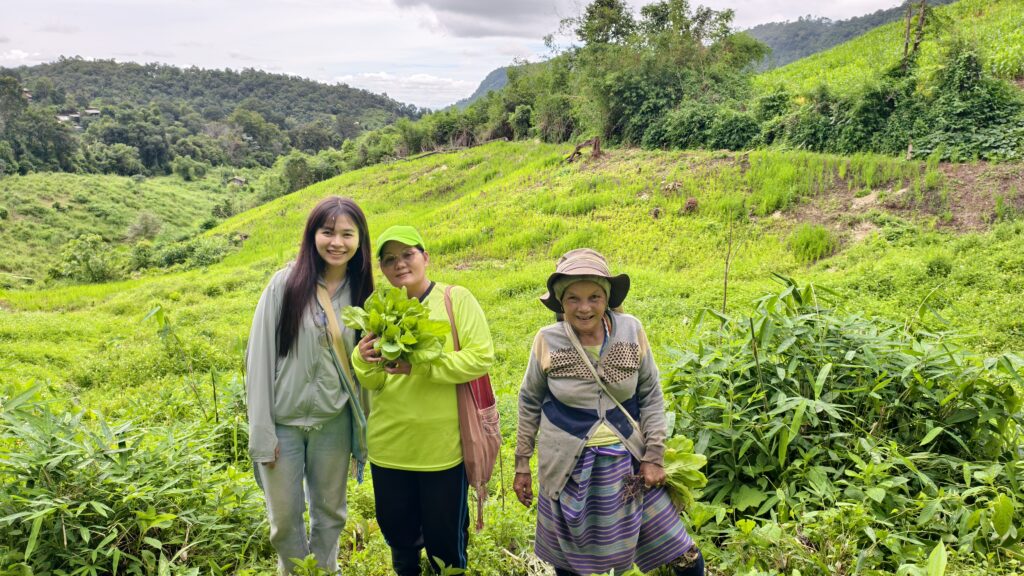
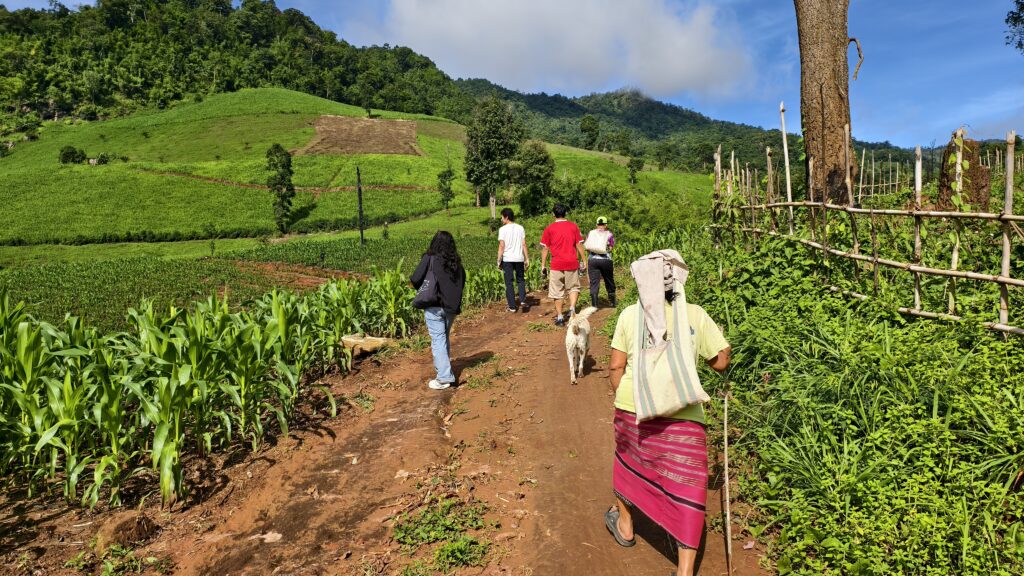
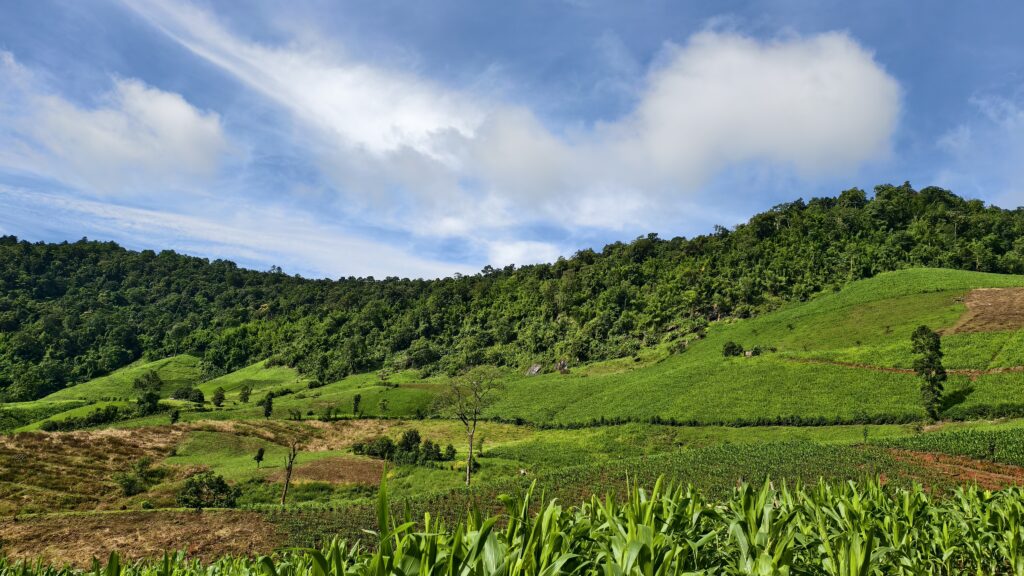
Life in the village is also changing socially and economically. Children now attend school, bringing both pride and new pressures into households. School fees and daily expenses have gradually pushed families to change how they farm. Subsistence crops alone are no longer enough. Many households have turned to crops that can generate quicker income, even though this was not how they once lived.
Yet the community continues to hold on to what matters. Women keep weaving, passing down skills from their mothers and grandmothers. Through my work with the community, we took small steps to support this effort, creating a Facebook page and designing packaging that reflects Karen knowledge and stories. These modest actions open another option for household income and help make the women’s work visible beyond a village that remains remote, with limited electricity, internet access, and market connections.
Ban San Din Daeng is a small village, remote, and often invisible, but deeply resilient. The community continues to adapt, not by abandoning its values, but by carefully negotiating change in everyday life. Working alongside them reminded me that adaptation is not only about climate or policy. It is about people trying to live with dignity, care for their land, and imagine a future that still feels like home.
This experience reminded me that community adaptation does not come from one-time activities, but from time, trust, and long-term support. ICI’s sustained support has allowed communities to learn, reflect, and explore solutions at their own pace.